
Department of International Relations
Department of International Relations
Department of International Relations
Department of International Relations

News
24.09.2026 13:31
High-Achieving Students Choose Turkish-Japanese University of Science and Technology in Its First Year
- Among state universities, Electrical and Electronics Engineering ranked sixth and Computer Engineering eighth, while Materials Science and Engineering ranked first in Türkiye at the Turkish-Japanese University of Science and Technology, which admitted its first students this year
- 53 percent of students admitted to TJU listed the university among their top three choices
- CoHE President Özvar: “We aim to make TJU a university that contributes to the global science and technology ecosystem”
September 24, 2026
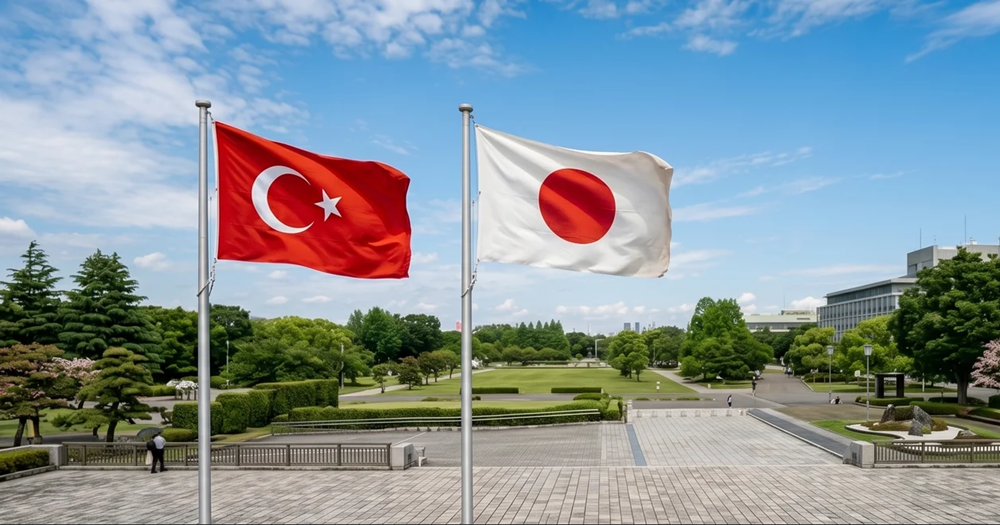
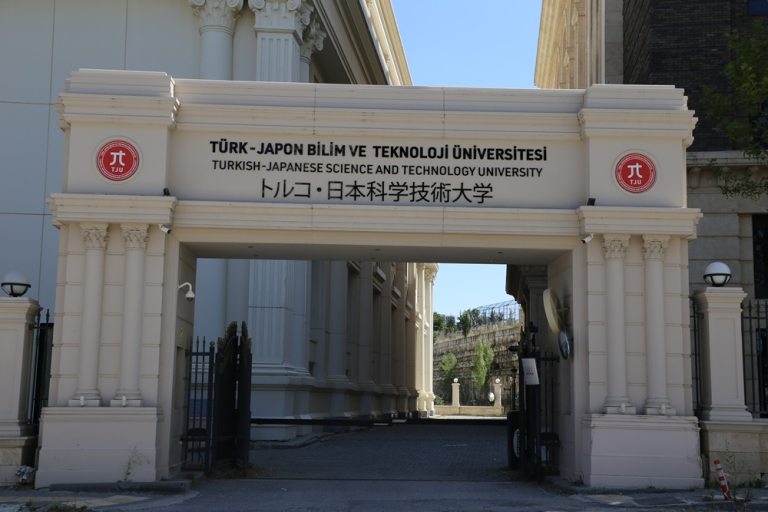
Established as an important example of scientific, technological, and higher education cooperation between Türkiye and Japan, the Turkish-Japanese University of Science and Technology (TJU) attracted high-achieving students in its first year.
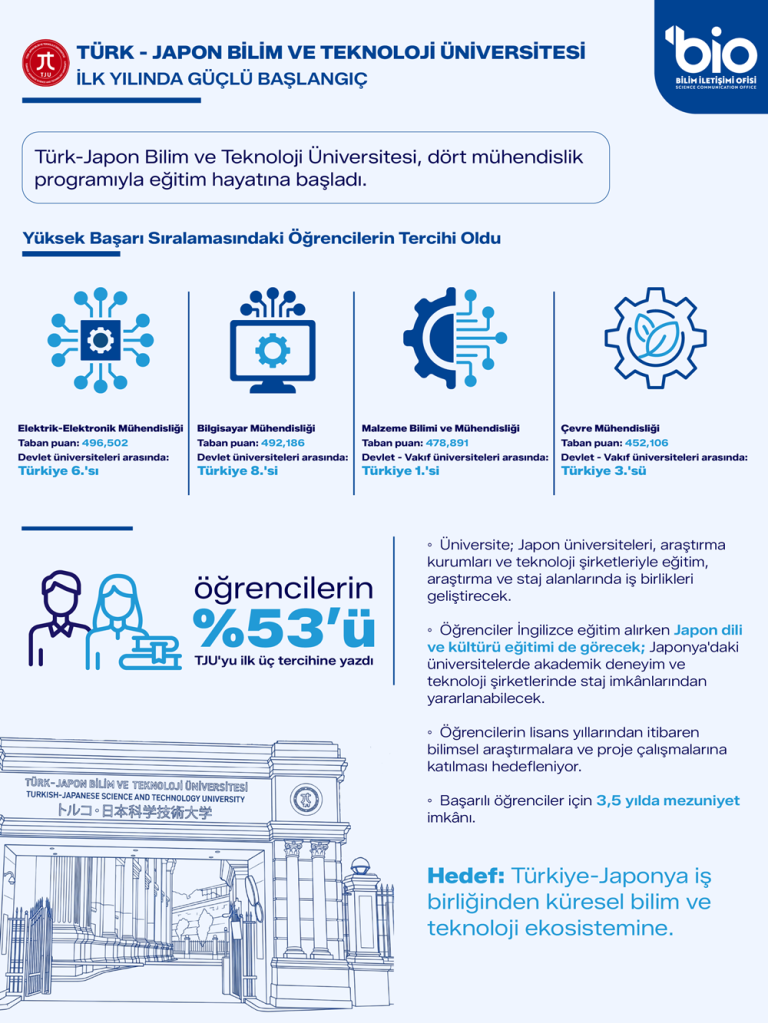
Admitting students for the first time in the 2026-2027 academic year, TJU stood out with the placement rankings achieved by its four engineering programs. Among the students admitted to the Electrical and Electronics Engineering and Computer Engineering programs were candidates in approximately the top 0.55 percent of the YKS rankings. Materials Science and Engineering ranked first in Türkiye in its field, while Environmental Engineering ranked third in Türkiye.
A total of 84 students were admitted to TJU, based on 20 general quota places and four places reserved for high school valedictorians for each program. Fifty-three percent of the students listed TJU among their top three choices. Of the 20 students admitted to the Electrical and Electronics Engineering program, 11 had listed the university as their first choice. Of the 80 students admitted through the general quotas, 45 were graduates of science high schools.
Established as a joint initiative of Türkiye and Japan, TJU was structured to transform scientific, technological, and higher education cooperation between the two countries into a lasting and productive partnership. The university’s academic model is based on a strong foundation in mathematics, natural sciences, and engineering. Its educational programs will be built around research, project development, laboratory work, hands-on education, and interdisciplinary collaboration.
- The University Begins Education with Four Engineering Programs
TJU began its undergraduate education with four programs: Electrical and Electronics Engineering, Computer Engineering, Materials Science and Engineering, and Environmental Engineering.
The programs were selected with consideration for areas of strategic importance to both Türkiye and Japan, including digital transformation, artificial intelligence, advanced materials, energy, environmental sustainability, and high-tech production.
The Electrical and Electronics Engineering program ranked sixth among state universities with a base score of 496.502. The Computer Engineering program ranked eighth among state universities with a base score of 492.186. The Materials Science and Engineering program ranked first in its field among state and foundation universities in Türkiye, with a base score of 478.891.
The achievement level of students admitted to the program reached approximately the top 1.9 percent. The Environmental Engineering program ranked third across Türkiye, after METU and ITU, with a base score of 452.106. Among the students admitted to the program were candidates in approximately the top 3.5 percent.
- Cooperation with Japan to Extend from Research to Internships
One of the key elements of TJU’s academic model is cooperation to be developed with universities, research institutions, and technology companies in Japan.
As part of these collaborations, students will participate in international research projects, gain academic experience at Japanese universities, and benefit from internship and hands-on training opportunities offered by Japanese technology companies.
Japanese academics will also contribute to TJU’s academic structure. Among the members of the university’s council is Prof. Ryoji Noyori, who was awarded the 2001 Nobel Prize in Chemistry.
Undergraduate education at TJU will be conducted in English. All students at the university will also receive education in the Japanese language and culture.
- High-Achieving Students Can Graduate in 3.5 Years
Undergraduate programs will be delivered through an integrated academic structure comprising 180 ECTS credits. Students with strong academic performance will be able to complete their undergraduate education in 3.5 years after completing the compulsory preparatory education.
With a model that places research and project development at the center of education, the university aims to enable students to participate in scientific research from their undergraduate years and gain international academic experience.
-The University Also Attracts International Media Attention
The Turkish-Japanese University of Science and Technology, one of the latest examples of scientific and technological cooperation between Türkiye and Japan, has also attracted the attention of the international media. An article published by Nikkei Asia highlighted the fact that TJU admitted students with high placement rankings in its first year.
Students speaking to Nikkei Asia said that connections to be established with Japanese universities and companies could provide opportunities in scholarships, internships, education in Japan, and employment.
It was also reported that TJU has signed memoranda of understanding with the University of Tokyo, the University of Tsukuba, and Institute of Science Tokyo. The university aims to provide education to 500 students within five years and establish a technopark featuring a “Japan R&D Cluster” to strengthen university-industry cooperation by 2028.
- Özvar: “It Will Bring the Science and Technology Ecosystems of the Two Countries Together”
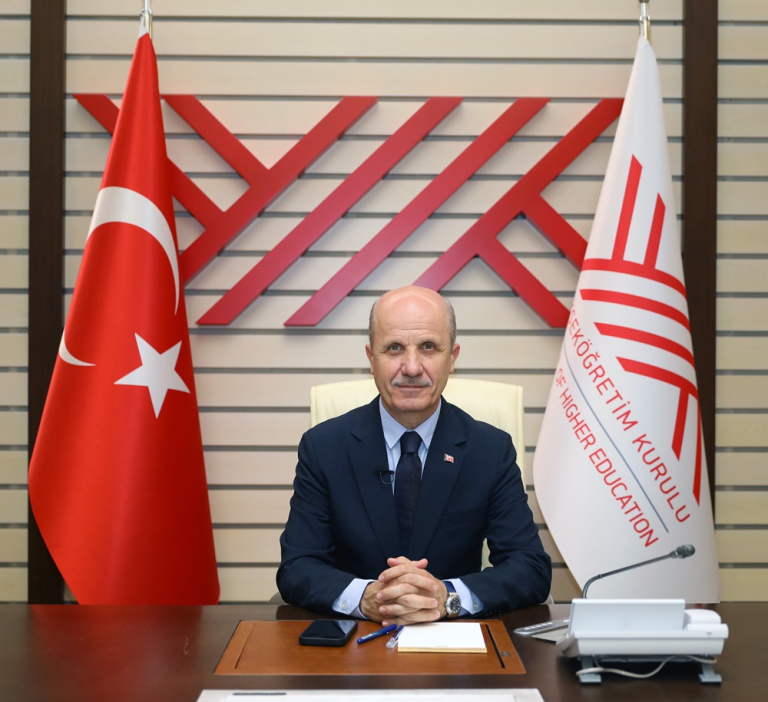
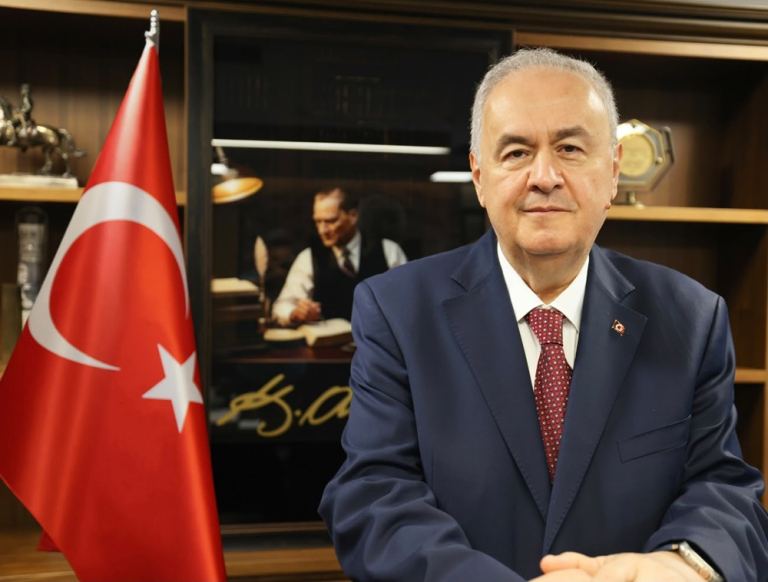
CoHE President Erol Özvar said that TJU’s admission of its first students with high placement rankings demonstrated that the university’s scientific vision at the establishment stage had resonated with students and their families.
Describing TJU as an important partnership model that will take scientific, technological, and higher education cooperation between Türkiye and Japan to a new level, Özvar said that they attach importance to the university developing not only as a higher education institution that trains highly qualified students but also as an international research center that brings together scientists, researchers, and technology ecosystems from the two countries.
Özvar noted that TJU’s coverage in the international media was also significant in terms of increasing the visibility of Türkiye’s international partnerships in higher education, and said:
“The fact that the Turkish-Japanese University of Science and Technology was chosen by students with high academic achievement in its very first year is an important starting point in terms of the contribution this university will make to Türkiye’s higher education system. The partnerships our university will develop with universities, research institutions, and technology companies in Japan will provide our students with international research and educational opportunities while also contributing to strengthening the scientific ties between the two countries.”
Özvar stated that TJU has been envisioned from the outset as a university that places research, innovation, and technology development at the center of its approach, adding, “In line with Türkiye’s internationalization goals in higher education, we aim for TJU in the coming period to become a university that contributes not only to Türkiye-Japan relations but also to the global science and technology ecosystem.”
- Rector Kök: “We Are Beginning Our Educational Journey with a Strong Founding Student Cohort”
TJU Rector Prof. Mustafa Verşan Kök stated that the students admitted in the 2026-2027 academic year represent the founding cohort that will shape the university’s first academic culture.
Kök said, “What matters is the academic achievement level of the students who chose our university and the fact that they placed TJU high on their preference lists. The results we achieved in our first year show that we are beginning our educational journey with a founding student cohort with strong academic potential.”
Stating that this confidence must be met with a highly qualified academic staff, laboratory infrastructure to be developed, research-oriented education, academic partnerships with Japanese universities, and opportunities for students to gain international experience, Kök emphasized that TJU’s success would not be measured solely by YKS base scores.


Other News
University Bridge Between Türkiye and ...
22.09.2026
Türkiye Launches New Project for ...
17.09.2026
Turkish Higher Education Launches ...
15.09.2026
From Brotherhood to Concrete Academic ...
14.09.2026
CoHE President Özvar to Visit Pakistan ...
12.09.2026
Turkish Students in Iran Given ...
12.09.2026
World Champion Choir Visits CoHE
08.09.2026
CoHE Shows Strong Solidarity with ...
03.09.2026