
Department of International Relations
Department of International Relations
Department of International Relations
Department of International Relations

News

09.04.2026 13:35
Education Struggles in Shadow of War: Universities in Gaza Destroyed, Hope Endures
- Shaath, Vice Chairman of the Board of Trustees and former Rector of Islamic University of Gaza: “We continue education wherever possible, including in shelters”
- “We are receiving significant support from Türkiye and expect greater attention from the international community”
April 9, 2026
Since October 7, 2023, when Israel launched attacks in Gaza that have reached the level of genocide, 1,351 university students and 241 academic staff members have lost their lives, while 2,891 students and 1,481 academic staff have been injured.
In Palestine, where the education infrastructure has suffered severe damage, 20 universities have been heavily damaged, 60 university buildings have been completely destroyed, and more than 80,000 students have been deprived of access to higher education.
Participating in the 11th Eurasia Higher Education Summit 2026, Palestine continues its efforts under the slogan: “We are still here, we are still teaching, and we remain committed to the future of education in Gaza.” Students who continue learning even amid war, along with academics striving to sustain education, demonstrate that hope remains alive in Palestine.
- Özvar Visits the Palestinian Booth
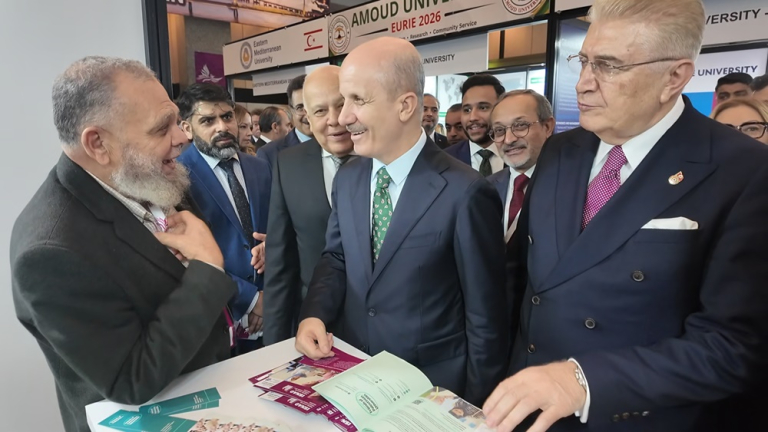
Erol Özvar, President of the Council of Higher Education, visited booths of universities and institutions from various countries after inaugurating the EURIE Exhibition Area. He also visited the Palestinian booth and spoke with students and academics.
In line with a decision by the Council of Higher Education, university students from Gaza studying in Türkiye are exempt from tuition fees.
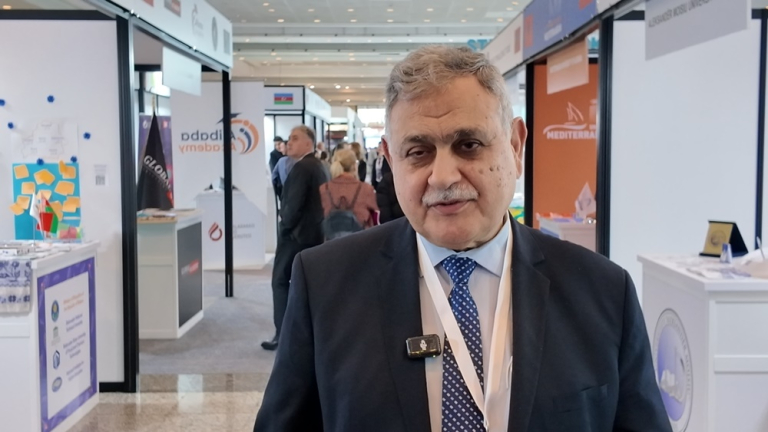
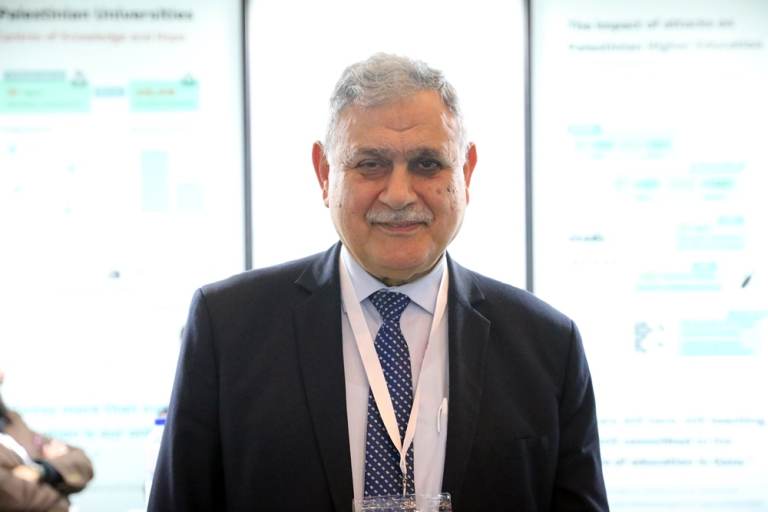
Representing his country at EURIE 2026, Prof. Kamalain Shaath, Vice Chairman of the Board of Trustees and former Rector of the Islamic University of Gaza, stated that higher education in Palestine—especially in Gaza—has been severely affected by the devastating impact of war. He noted that most universities have been bombed and rendered unusable, and that the education infrastructure has nearly collapsed.
- “We Developed Alternative Solutions to Sustain Education”
“Most of our universities have been destroyed and bombed,” said Prof. Shaath, underscoring the scale of the devastation. Despite all the challenges, he noted that they have developed alternative solutions to continue education.
He explained that even under wartime conditions, education has not come to a complete halt, and that approximately 70% of academic activities have been sustained through online learning.
Following the ceasefire, efforts have begun—albeit limited—to resume in-person education. “Some students continue attending classes wherever possible, including in shelters. At present, around one-third of students are able to receive face-to-face education,” he said.
Prof. Shaath emphasized that education is not limited to classroom instruction; efforts are also being made to revive research, internships, and community service activities. However, due to the blockade and movement restrictions, all these efforts are being carried out under extremely difficult conditions.
- “Türkiye Has Done a Great Deal for Gaza and Palestine”
Calling on the international community, Prof. Shaath stated that they expect support from academic circles.
Highlighting the historical ties of friendship with Türkiye, he said: “Türkiye has done a great deal for Gaza and Palestine. It even built a training hospital in eastern Gaza. We are receiving significant support from Türkiye. We are currently in a very difficult situation, and during these challenging times, both the Turkish State and the Turkish people have supported us and our students without hesitation.”

Other News
High-Achieving Students Choose ...
24.09.2026
University Bridge Between Türkiye and ...
22.09.2026
Türkiye Launches New Project for ...
17.09.2026
Turkish Higher Education Launches ...
15.09.2026
From Brotherhood to Concrete Academic ...
14.09.2026
CoHE President Özvar to Visit Pakistan ...
12.09.2026
Turkish Students in Iran Given ...
12.09.2026
World Champion Choir Visits CoHE
08.09.2026